DCase is an advanced, modular, API (Application Programming Interface)–based service management platform that brings together information technology teams and other departments in the era of digital transformation. The purpose of DCase is to increase operational efficiency, expand automation, and integrate all business processes with each other.
DCase provides end-to-end service management with smart forms, automation engine, reporting, SLA (Service Level Agreement) tracking, and integrated systems.
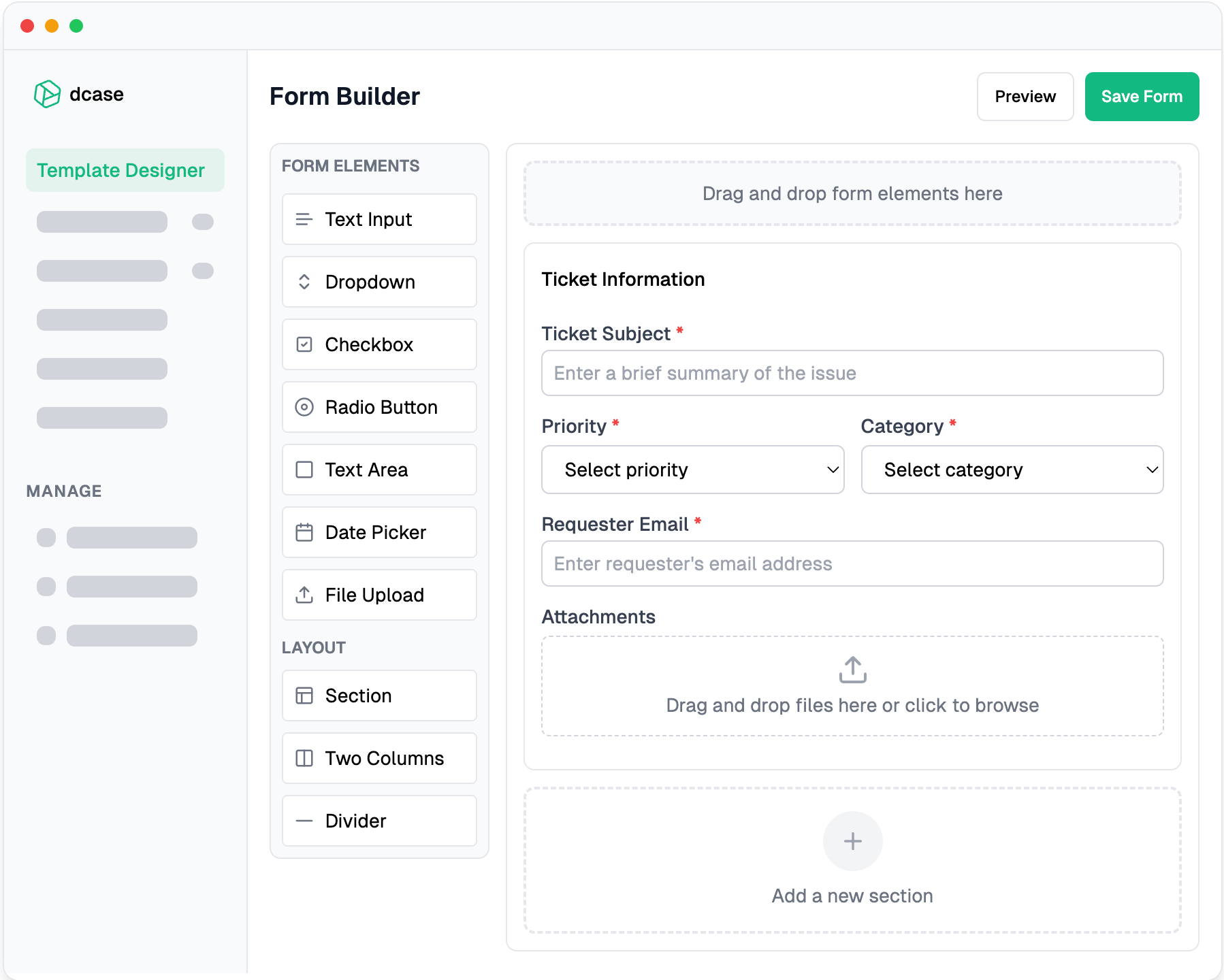
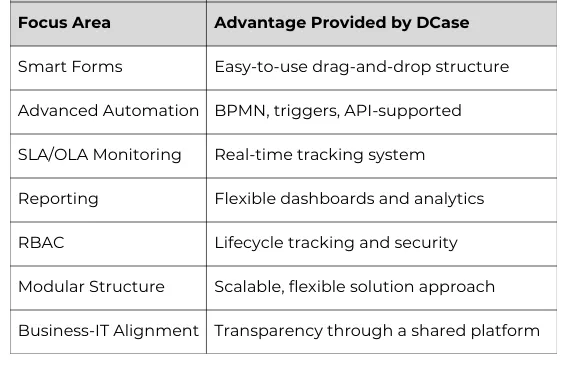
Dynamic Form and Template Designer: Without the need for coding, you can create custom forms for calls and requests with drag-and-drop, personalize processes with role-based views and conditional fields.
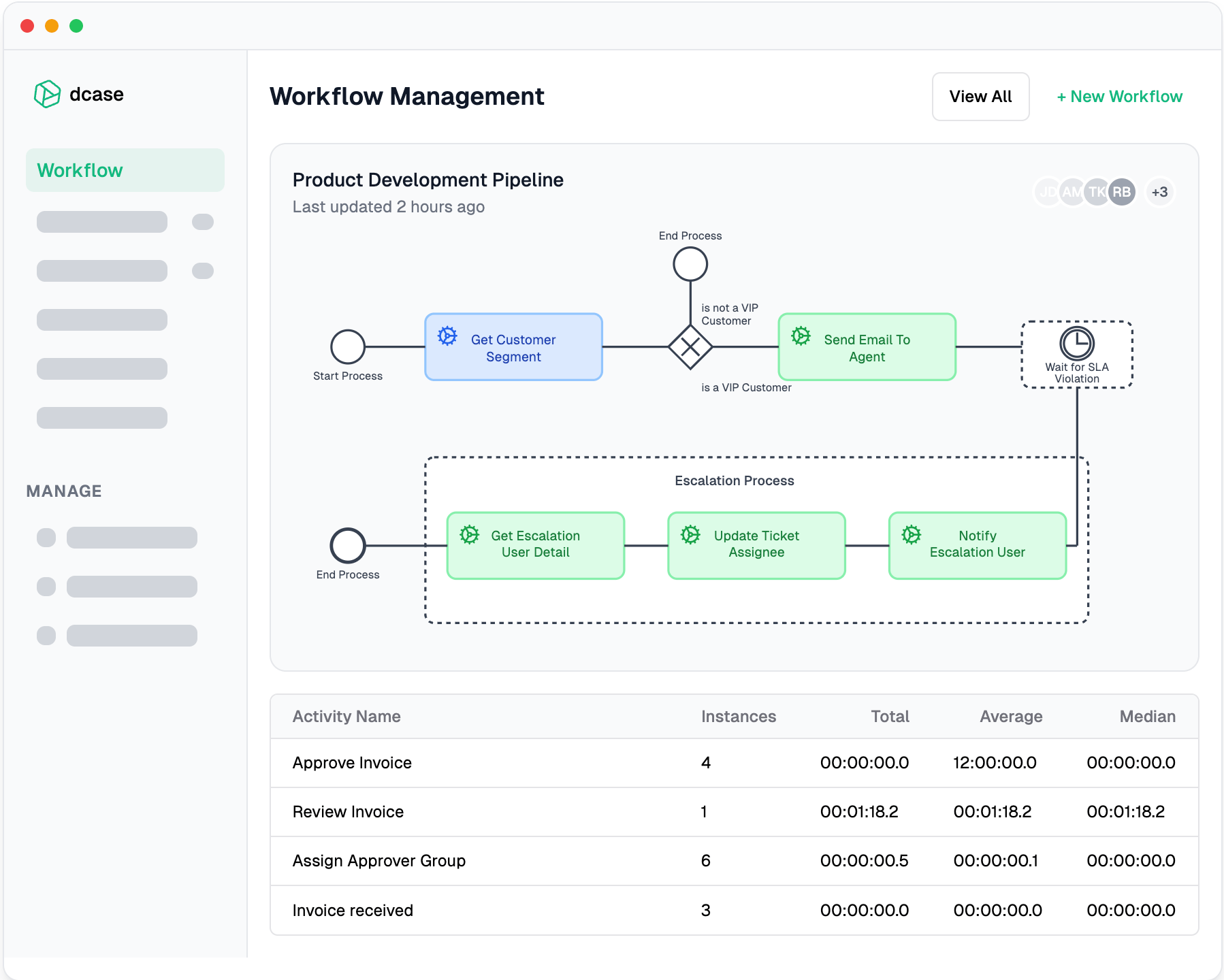
Advanced Workflow Management: With BPMN (Business Process Model and Notation)–based predefined flows, rule-based processing, approval workflows, and API (Application Programming Interface) support, you can automate repetitive tasks.
Incident and Request Management: You can benefit from user-friendly services with automatic call creation by category, real-time alerts, root cause analysis (RCA), and a self-service portal.
SLA/OLA (Service Level Agreement / Operational Level Agreement) Tracking: With SLA templates, you can access automated processes, early reminders, violation management, and live performance dashboards.
Reporting and Analytics: You can gain powerful insights with custom dashboards, analytics, scheduled reporting, and multi-level data filtering.
Asset and Template Management: Track the lifecycle of IT (Information Technology) assets and document your processes with the template manager.
Security and Access Management: With multi-tenant monitoring, API tokens (API keys), role-based access control (RBAC), and detailed audit features, it is suitable for enterprise-scale operations.
DCase stands out from other platforms by:
Who is DCase For?
DCase is suitable for:
DCase provides distinct values and advantages depending on its focus areas. You can find the summarized information in the table below:
DCase is a service management product designed for the digital age that combines technology, automation, analytics, and integration. Rather than a classic system-focused approach, it offers a user-centric and proactive service method integrated with business processes. It is a strong candidate for all organizations that want to transform their teams from an operations center into value-generating business solution partners.